



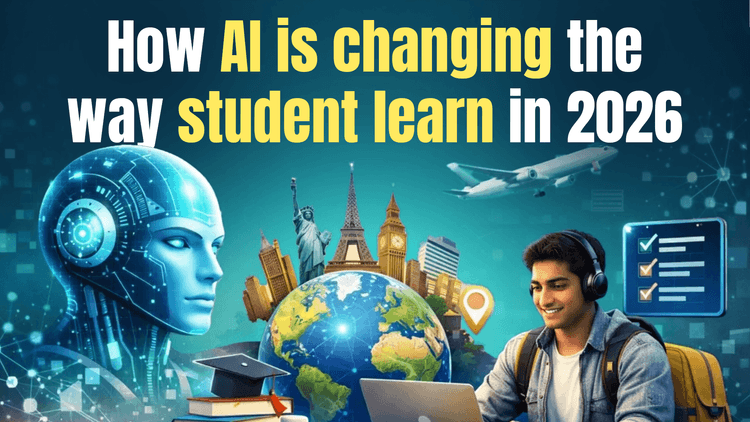

One thing is clear when you step into a classroom in 2026, whether it's a virtual learning environment in Lagos, a thriving engineering college in Bengaluru, or a suburban high school in California. AI is no longer just a tool. It has transformed into a learning tool. Not in a sci-fi sense, but rather as a patient and trustworthy addition to each student's digital toolset.
This is the current condition of affairs. Furthermore, a picture of how AI in education is influencing study habits, revision, career planning, teamwork, and confidence emerges from observing what students really accomplish, rather than just what politicians say they should do.
The New Normal: How Students Effectively Use AI in 2026
Here's what learners are up to, based on classroom observations, conversations with teachers, and global reports:
-
Artificial intelligence tutors provide instant clarity. When a concept does not stick, learners do not wait for the following lecture. They ask an AI tutor questions like, "Explain this in simple terms," or "Give me an example that applies to real life."
-
Refining assignments, not cheating. Students use AI technologies to explain their reasoning, revise problematic passages, and test various argument structures.
-
Project management assistance. For large assignments or capstone projects, AI organises activities into timeframes, dependencies, and resources, allowing students to operate like mini-researchers.
-
Personalised revision playlists. Instead of generic chapter questions, students now use AI-generated question banks that are personalised to their specific faults and weaknesses.
-
Early career planning. Students use AI as a career coach, creating resumes, simulating interviews, and finding skill gaps.
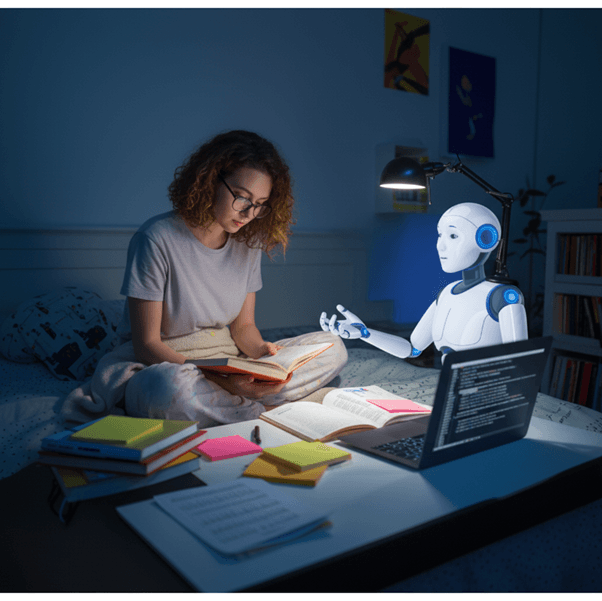
When asked why they rely on AI, many students answer "It helps me learn the way I learn."
That sentence expresses the essence of how AI is transforming education. It's all about making learning truly personal.
The Core Shift: From One-size-fits-all to Truly Customised Learning
Traditional classrooms have long failed to provide customised instruction at scale. Teachers are extremely skilled, but it is difficult to provide an explanation that truly resonates with each of 30 pupils in a 45-minute lesson.
AI alters this.
By 2026, artificial intelligence (AI) will have progressed from an experimental tool in education to an integral component of personalised learning. Intelligent tutoring systems (ITS) have become a common feature. A comprehensive review reveals that ITS and comparable AI tools are extremely effective at providing flexible, personalised cognitive help.
These systems do more than just teach learners; they also learn about them. AI tailors its explanations to each student's interactions, where they struggle, and how they ask questions in real time.
Real-World Case Study: AI Tutoring in Physics Education.
Here is a concrete example: Physics-STAR is a large language model-powered tutoring system designed for high school physics. In a controlled study, this AI instructor provided step-by-step assistance and personal comments, with strong results:
- Students who used Physics-STAR did much better than those who attended traditional teacher-led lectures.
- Their efficiency (time spent solving problems) increased significantly, and their mental knowledge of complex physics concepts grew.
- Importantly, the method facilitated reflective learning and encouraged students to consider "why" and "how."
That is not just automation; it is pedagogical augmentation. It is AI that assists learners in developing a strong knowledge rather than simply providing rapid solutions.
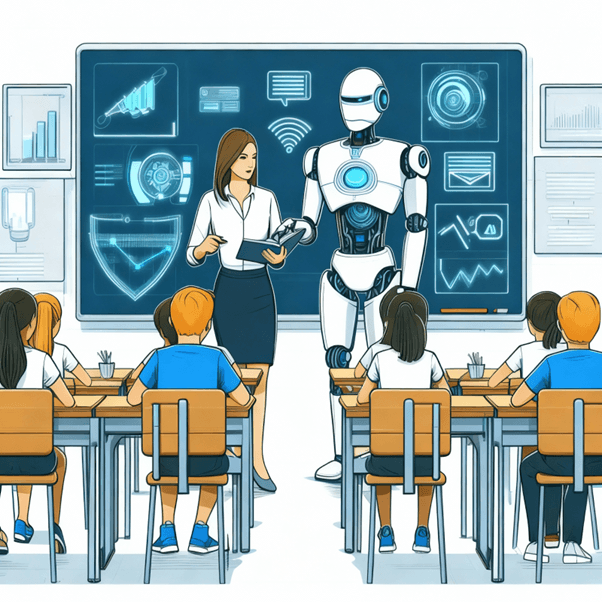
But Will AI Replace Teachers?
One of the most common anxieties (and clickbait questions): Will AI replace teachers?
What's the answer? Not really. However, teachers who do not use AI may eventually fall behind.
AI possesses immense strengths.
- Real-time feedback
- Explaining in different ways
- Possesses infinite patience and can adjust to changing pace.
In contrast, teachers bring
- Empathy and Mentorship
- Contextual judgement.
- Motivation and Inspiration
- Nuanced guidance
- Ethical and emotional intelligence
A new study on hybrid AI-human tutoring confirms this: combining AI tutors with human instructors resulted in more cost-effective, scalable support, greatly enhancing both engagement and achievement.
In effect, AI expands teachers' capabilities by relieving them from mundane duties (marking, reviewing drafts) and allowing them to focus on big-picture teaching, mentoring, and critical thinking support for students.
Traditional Learning vs AI-Augmented Learning (2026)
| Aspect | Traditional Learning | AI-Augmented Learning (2026) |
|---|---|---|
| Pacing | One pace for all | Personalized speed matched to each student’s needs |
| Feedback | Delayed (homework, grading, exams) | Instant, adaptive, continuous feedback |
| Doubt Resolution | Only during class hours or office time | 24/7 tutor available |
| Revision | Textbook + teacher-supplied exercises | AI-generated questions + spaced practice based on student errors |
| Project Planning | Manual timeline creation | AI structures tasks, resources, and milestones |
| Career Guidance | Counselors or manual research | AI-driven mock interviews, resume help, role recommendations |
| Accessibility | Varies widely | More democratized, scalable AI tutoring bridges gaps |
| Teacher Role | Lecturing, grading | Mentoring, high-impact teaching, socio-emotional support |
How Students Use AI: Classroom Stories
To put this into context, below are real-world examples of how students in 2026 engage with AI:
- This is "AI Doubt Buddy"
When a student encounters a conceptual obstacle late at night, they do not wait for an instructor. They launch the AI tutor, request various analogies, and select the one that makes sense to them.
- The project's "AI Revision Sprint"
Before exams, students input their class notes or previous test blunders to an AI tool. The tool creates a personalised quiz and flashcard set, focussing on where they went wrong the last time.
- The "AI Project Architect"
For a research project or lab assignment, students ask AI to divide the work into phases, recommend references, create a timeline, and even suggest potential pitfalls.
- The "AI Career Coach"
It helps students map their coursework to job roles. They conduct mock interviews, ask the AI to produce relevant projects, and receive advice on how to develop skills relevant to future employment.
- Our "AI Accountability Partner"
Some students set up their AI to nudge them: "Revise this chapter tomorrow," or "Test me on this topic again in 3 days." Essentially, AI helps them develop consistent study habits.
Global Trends and Policy Takeaways
AI in education is more than just a local phenomenon. Major organisations throughout the world are shaping how AI can be utilised in the classroom in an ethical, fair, and productive manner.
UNESCO, for example, emphasises a human-centered and rights-based approach. Their reports express concern about equity, data protection, and access challenges.
UNESCO hosted Digital Learning Week 2025, bringing together educators and policymakers from around the world to debate governance, pedagogy, and AI-competency frameworks.
According to the World Economic Forum, artificial intelligence (AI) might automate up to 20% of teachers' administrative duties, allowing them to focus on relationships and high-impact instruction.
Based on these global signals, a few strategic directions emerge:
- Prioritise AI literacy and digital abilities for both learners and educators.
- Create ethical guidelines for protecting student data and promoting responsible AI use.
- Scale AI-human hybrid models to assist underprivileged communities.
- Invest in adaptive tutoring technologies to personalise and democratise learning.
Risk, Equity, and the Human Element
Of course, the AI revolution is not without its problems. Real talk:
- The digital divide means that not all pupils have equal access to devices and dependable internet. UNESCO worries that this can exacerbate inequality.
- Privacy and data rights: Mishandling student data poses a serious risk. We require transparent policies, consent systems, and robust safeguards.
- Is critical thinking at risk? Some fear that pupils may rely on AI explanations without questioning them thoroughly.
- Teacher preparedness: Many instructors continue to lack proper AI training. UNESCO advocates for capacity building.
However, when done correctly, AI maximises human potential.
Why This Matters: Cognitive Accessibility is Shifting.
The most significant change is in how students access learning.
AI does more than only accelerate learning; it also makes cognitive processing more accessible. For students who struggle with abstract concepts, jargon-heavy texts, or diverse learning styles, AI tutors serve as personalised translators, assisting each student in processing information in the way that works best for them.
This is not a short term technology trend. It represents a shift in cognitive accessibility, making complicated thought more personal.
The Future is Already Being Built, and Students Can Help Design It
By 2026, learning with AI will be as fundamental as learning to search the internet once was. As AI becomes embedded in classrooms and workplaces alike, students will increasingly be expected not just to use tools—but to think alongside them.
That means future-ready education must prioritise skills such as:
• AI literacy and responsible use
• Data analysis and interpretation
• Prompt design and human–AI collaboration
• Cloud computing fundamentals
• Machine Learning awareness
• Framing real-world problems for technical solutions
These are no longer niche or optional skills. They form the baseline for modern careers, across technology, business, research, and beyond.
How AlmaBetter Prepares Students for an AI-Powered Future
As education evolves toward a human + AI model, the role of learning institutions must evolve too—from content delivery to capability building.
This is where platforms like AlmaBetter align naturally with the direction education is heading:
- Students work with real AI tools across Data Science, Machine Learning, Cloud Engineering, and Full-Stack Development.
- Learning is project-driven, mirroring how AI is used in real workplaces rather than theoretical classrooms.
- Mentorship remains human-led and personalised, complementing AI-driven learning instead of replacing it.
- Career preparation is integrated from day one, ensuring students graduate with job-ready skills, along with certificates.
In short, if the future of education and work is collaboration between humans and intelligent systems, AlmaBetter focuses on preparing students to lead that collaboration, not just adapt to it.







 in Bengaluru, India


 in Bengaluru, India