









It rarely begins with a big career decision.
It begins quietly.
A LinkedIn post during your lunch break.
A YouTube video promoting a "tech career roadmap."
A friend casually remarks that they converted to technology last year.
Suddenly, a question you've ignored starts to repeat itself:
"Should I move to tech?"
"Am I already too late?"
"And honestly… how long would it take me?"
If you're between the ages of 20 and 35 and work in a non-tech field—sales, marketing, operations, finance, human resources, teaching, customer service, or anything completely unrelated—this issue is about more than just time.
This is about:
- Career Risk
- Income Stability
- Starting from scratch.
- Choosing the Right Course
- Trusting the placement procedure.
This blog is not intended to motivate you with overnight success stories.
Consider this as:
A cooking recipe (ingredients, preparation time, and pitfalls to avoid).
A travel journey (routes, checkpoints, and delays).
A decision-making coach helps you calm down and pick intelligently.
Let's speak about what the transition actually looks like.
The Relatable Pain Point: "Everyone Else is Moving Faster"

One of the most difficult aspects of being a non-tech professional nowadays is comparison.
You see:
- Peers switching to technology.
- Juniors earn more than you.
- Reels claim "non-tech to placement in 90 days"
And you start to believe:
"If I don't move now, I'll be left behind."
What social media rarely portrays:
Wrong role choices
- People drop out of courses in the middle
- Months of bewilderment before enlightenment.
- Multiple interview rejections.
Before we ask how long it takes, we need to dispel a few myths.
Myth #1: Technology is just for coders.
This single fallacy discourages more people than a lack of talent ever does.
Technology is more than just one career.
Just like a restaurant has chefs, managers, waitresses, and supply chains, technology has numerous positions, many of which do not require much coding.
Common technical roles include:
- Data Analyst
- Business Analyst
- QA/Test Engineer
- UI/UX Designer
- Product Manager
- Technical Support
- Cloud and DevOps roles
- Low-code or no-code development
Some roles require a significant amount of coding.
Some are logically weighty.
Some are communication-intensive.
So when anyone asks:
"How long does it take to move from non-tech to tech?"
The right answer is:
"Which tech role are you aiming for?"
Your chronology is significantly more dependent on role selection than intelligence.
Myth #2: You need an engineering degree to succeed in technology.
Many professionals delay making a decision because they believe:
"I didn't study engineering, so tech isn't for me."
In truth, most entry-level IT hiring is centred on:
- Skills
- Problem-solving
- Practical exposure
- Communication
Not the degree you received years ago.
Yes, some positions necessitate advanced technological knowledge.
However, many technology occupations nowadays are specifically built for career changers.
What matters is structured learning, not background.
What Changes When You Switch to Technology?
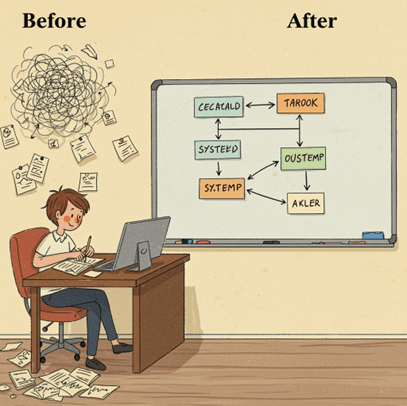
Moving into technology entails more than just learning Python, SQL, and testing frameworks.
- It is about learning.
- How to divide problems into steps.
- How do systems interact?
- How to learn alone.
- How to keep calm when you don't know the answer
In non-tech roles, experience accumulates slowly.
In technology, learning accumulates quickly, but only with the appropriate foundation.
Most individuals underestimate the mental transformation.
The Real Journey: A Phase-by-Phase Analysis
Let's approach the shift as a journey, not a race.
Phase 1: Exploration and Role Clarity (2–4 weeks)
This phase appears easy, but it determines everything.
Your job here is not to begin coding.
Your job is to choose the right path.
You should:
- Understand various technical roles.
- Map them to your current strengths.
- Eliminate roles that do not align.
Examples:
- Excel, reporting, and insights skills are essential for data roles.
- QA / Testing requires attention to detail and a focus on processes.
- UI/UX comes from combining creativity and analysis.
- Logical issue solving leads to development.
A common mistake is joining a course based only on its popularity.
This phase takes 2-4 weeks, but neglecting it can result in months of regret.
Phase 2: Foundation Learning (2–3 Months)
Now the real cooking begins.
- This is where you acquire the basic materials.
- Programming foundations or tools
- Industry terminology
- Problem-solving structure.
- Experiential learning
This is where choosing the appropriate course is critical.
- Beginner-friendly courses should:
- Assume a zero background.
- Explain concepts from scratch.
- Provide real-world instances.
- Encourages daily practice.
Time Commitment:
- 1-2 hours on weekdays.
- 3-4 hours on weekends.
At this stage:
- Confusion is typical.
- Self-doubt is normal.
- Slow progression is normal.
- It doesn't imply you're failing.
Phase 3: Skill Development and Projects (2–3 Months)
This stage separates intention from commitment.
Why does it feel hard?
- Tutorials end.
- Real difficulties begin.
- Mistakes rise.
But this is also where metamorphosis occurs.
You'll:
- Build little projects.
- Debug problems.
- Learn how tools operate together.
- Begin thinking like a tech professional.
Projects are more important than diplomas.
If the course includes:
- Case Studies
- Capstone Projects
- Real-life problem-solving
You're increasing your employability.
Timeframe: 2-3 months.
Phase 4: Job Readiness and Placement Preparation (1–2 Months)
Getting a job is more than just having the necessary skills.
It's all about location.
You will work on the following:
- Tech-focused résumé
- Portfolio or Github
- Mock interviews.
- Communication skills
- Understanding hiring expectations
This is when placement assistance becomes critical.
Real placement preparation consists of:
- Resume reviews
- Interview simulations.
- Job referrals or recruiting networks
- Feedback following rejection
Timeline: 1–2 months, depending on function and market.
So, How Long Does It Really Take?
| Phase | Time |
|---|---|
| Exploration & Clarity | 2–4 weeks |
| Foundation Learning | 2–3 months |
| Skill Building & Projects | 2–3 months |
| Placement Preparation | 1–2 months |
Realistic total timeline: 6–9 months
Not 30 days.
Not “guaranteed placement in 45 days.”
But a timeline that builds confidence and employability.
Why Some People Take 12 Months (It's Not Failure)
There are many people:
- Work full-time.
- Have family duties.
- Study inconsistently.
- Re-evaluate their role midway.
Technology is not a race.
In the long run, clarity outperforms speed.
The Impact of a Course on Your Transition
A course alone will not transform your career.
However, the appropriate course can:
- Reduce confusion.
- Save time.
- Provide structure.
- Improve placement preparedness.
A poor course achieves the opposite.
Do not ask:
"How fast can I finish this course?"
Ask:
"Will this course help me become employable?"
What Does Placement Actually Mean?
Placement does not indicate:
- Guaranteed wage.
- Zero effort
- No rejection.
Placement means:
- Preparation
- Access
- Guidance
- Support
You still need to be consistent and patient.
A Simple Self-Assessment Before You Begin
Ask yourself:
- Can I commit to 6-9 months realistically?
- Can I be consistent and not perfect?
- Am I comfortable being a beginner again?
- Am I choosing technology for development rather than shortcuts?
If the majority of the answers are yes, you are ready.
Final Thought: This is about alignment, not speed.
Moving from non-tech to tech does not imply becoming someone else.
This is about:
- Translating your existing strengths.
- Adding technical skills.
- Making a thoughtful professional decision.
Some travels are highways.
Some are scenic paths.
Both reach their target.
Your Next Step: Choosing Structure Over Guesswork.
Instead of asking, "How long does it take to move to tech?"
Ask the question: "What would my transition look like with the right guidance and structure?"
Most non-tech professionals do not fail because technology is difficult.
They struggle because they're learning alone, without clarification on:
- Which role best suits them?
- What to learn first.
- How much practice is sufficient?
- How hiring really works.
This is where organised learning platforms can make a significant difference.
If you're looking for options, AlmaBetter is worth considering, especially if you're coming from a non-tech background and prefer clarity over shortcuts.
What sets it apart:
- Beginner-first program that starts from the basics
- Project-based learning focusses on real-world situations.
- Mentored guidance, so you're not figuring things out alone.
- Strong placement preparation focused on resumes, interviews, and job readiness.
It is intended for folks who are considering a thoughtful career change rather than those looking for fast gains.
Because the proper decision does more than only shorten your timetable.
It makes the path more clear, serene, and sustainable.
Switching to technology is not about going quickly.
It's about moving forward with confidence.
ADDITIONAL READINGS
- https://www.hakia.com/careers/transitioning-to-tech/
- https://riddleworkforce.com/how-to-transition-into-tech-without-a-technical-background/?utm_source=chatgpt.com
- https://www.geeksforgeeks.org/blogs/transitioning-into-tech-from-a-non-traditional-background/
- https://www.linkedin.com/pulse/breaking-tech-without-experience-step-by-step-career-tible
- https://www.webasha.com/blog/how-to-start-a-career-in-it-from-a-non-technical-background-step-by-step-guide-for-beginners
- https://www.youtube.com/watch?v=GDgFF-KH3m8&t=1s
- https://www.northcoders.com/blog/comprehensive-guide-to-changing-careers-into-tech-faqs/
- https://www.airswift.com/blog/how-to-transition-into-tech