




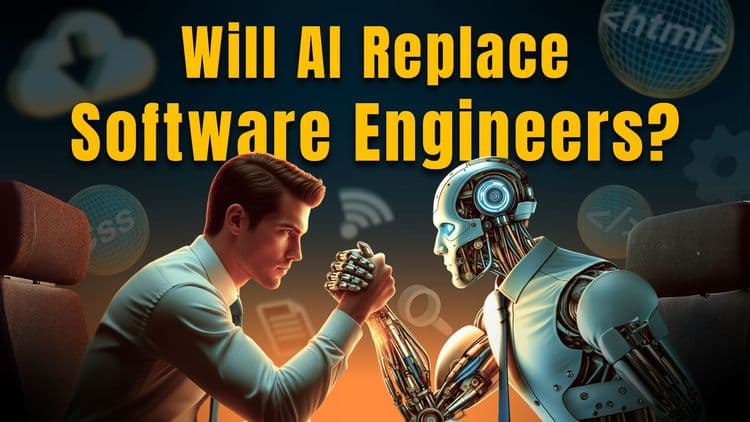


No, AI will not replace software engineers.
What it will replace is outdated learning paths, shallow skill sets, and the belief that writing code alone is enough to survive in tech. If you’re worried about choosing the right course, cracking placements, or whether software engineering is still worth pursuing, that concern is rational—not dramatic.
Let’s talk about it honestly.
Why Is Everyone Suddenly Asking If AI Will Replace Software Engineers?
This fear didn’t appear overnight. For years, automation quietly improved productivity without threatening identities. Databases didn’t scare developers. Frameworks didn’t cause panic. Even cloud computing, which wiped out entire categories of manual infrastructure work, was seen as progress rather than replacement.
AI feels different.
For the first time, a tool doesn’t just support engineers in the background—it performs the most visible part of their job. It writes code. It explains errors. It generates entire files in seconds. To someone watching from the outside, this looks dangerously close to replacement.
And when headlines amplify that fear, claiming coding is dead or that AI can build apps end-to-end—it’s natural for beginners to question whether they’re about to invest years into a shrinking career.
The problem isn’t that fear exists. The problem is what the fear is based on.
Are Software Engineers Just Paid to Write Code?
This assumption is where most arguments collapse.
If software engineering were just about typing code, it would have been automated long ago. Code has always been the easiest part of the job to replicate. The hard part is deciding what to build, why to build it, and how to make it survive real-world use.
Engineers deal with incomplete requirements, conflicting priorities, unreliable data, unpredictable users, and systems that evolve over years—not clean prompts. They make trade-offs between speed and stability, cost and scale, elegance and practicality. And when something breaks, they’re accountable.
AI doesn’t own decisions. Engineers do.
That distinction hasn’t changed. It’s simply becoming more visible.
Is Coding Becoming Irrelevant in the Age of AI?
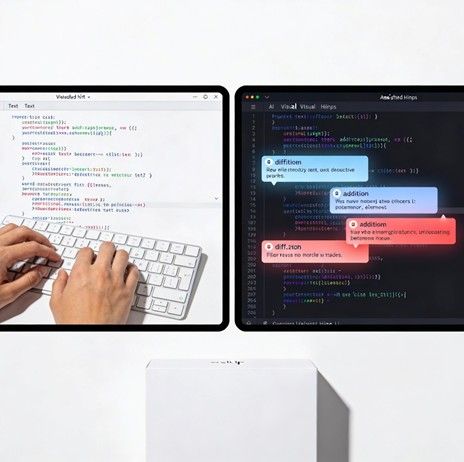
Coding isn’t becoming irrelevant. Unthinking coding is.
For a long time, the industry tolerated shallow skill development. Beginners could memorize syntax, rely heavily on tutorials, and learn slowly on the job. AI compresses that phase dramatically. Syntax is now trivial. Boilerplate is instant. Trial-and-error is assisted.
This feels threatening only if your value was execution alone.
Historically, every major productivity leap has raised expectations. When high-level languages replaced assembly, developers didn’t disappear, they took on bigger problems. When frameworks simplified frontend development, engineers weren’t fired, they were expected to ship faster and think broader.
AI is doing the same thing. It doesn’t eliminate the need for engineers. It eliminates the comfort of being average.
AI vs Software Engineers: Who Is Actually Competing With Whom?
Framing this as AI versus engineers is misleading.
The real divide is between engineers who adapt and engineers who don’t.
AI doesn’t participate in architecture discussions. It doesn’t push back when product requirements are unrealistic. It doesn’t notice long-term maintenance risks unless someone explicitly asks. And it doesn’t take responsibility when shortcuts cause outages months later.
AI executes. Engineers decide.
In real teams, AI behaves like a junior assistant with infinite energy but zero accountability. Useful, fast, occasionally impressive, but still dependent on human judgment. Engineers who understand this dynamic thrive. Those who expect AI to replace thinking struggle.
Why Does It Feel Like Entry-Level Software Engineering Jobs Are Disappearing?
This is where the conversation gets uncomfortable, but necessary.
AI affects entry-level work first, not because beginners are less important, but because their tasks were already closer to automation. Earlier, companies hired many junior developers to handle repetitive coding and expected them to grow gradually. AI now performs much of that repetitive work.
As a result, companies hire fewer juniors, but expect more from those they do hire.
This doesn’t mean beginners have no future. It means the path has changed. Placements now favor candidates who understand fundamentals, can explain their reasoning, and adapt quickly. The industry hasn’t stopped hiring fresh talent. It has stopped hiring people who rely purely on memorization and copy-paste learning.
What Tech Jobs Can AI Not Replace?
AI excels in structured environments. Real software engineering is rarely structured.
Roles that require system-level thinking, long-term ownership, and constant interaction with human ambiguity remain difficult to automate. Backend engineers who design scalable architectures, data engineers who manage messy pipelines, platform engineers responsible for reliability, and product engineers translating business needs into technical decisions all operate in spaces where context matters more than speed.
As AI improves at generating code, these roles become more valuable. Automation increases the cost of poor decisions, making human judgment even more critical.
AI doesn’t replace engineers who think holistically. It exposes engineers who don’t.
What Does the Future of Software Engineers With AI Look Like?
Over the next five to seven years, software engineering will evolve rather than disappear.
The definition of “junior” will narrow. Expectations will rise. Titles may change. But the core demand for people who can reason through complexity, adapt to tools, and take responsibility for outcomes will remain.
What will disappear is the illusion that learning syntax guarantees a job.
This is why learning paths matter more than ever. Panic quitting helps no one. Blind optimism helps no one either. The middle ground of realistic preparation is where opportunity lies.
Should You Still Take a Software Engineering Course in 2026?

Yes, but only if the course reflects how the industry actually works today.
A good course doesn’t ignore AI, and it doesn’t sell AI as a shortcut. It teaches fundamentals first: problem-solving, data structures, databases, system thinking. Then it shows how AI fits into modern workflows—accelerating work without replacing understanding.
This distinction matters for placements.
Some platforms still teach as if nothing has changed. Others, such as AlmaBetter, have started adapting their curriculum to reflect industry reality. The focus remains on strong foundations, real-world projects, and placement readiness, while acknowledging that AI tools are now part of everyday development rather than something to fear.
The goal isn’t to compete with AI. It’s to learn how to work effectively alongside it.
How Is AI Actually Changing Placements?
Placements aren’t disappearing. They’re becoming more selective and more honest.
Interviewers today are less interested in whether you can recall syntax and more interested in how you approach problems. They care about clarity of thought, reasoning, and ownership. Projects still matter, but only if you understand what you built and why you built it that way.
Using AI during preparation isn’t a disadvantage. Using it to avoid understanding is.
This is why placement outcomes increasingly correlate with how well a course prepares students for real-world expectations. Programs that emphasize reasoning, adaptability, and realistic projects, rather than guaranteed results, tend to produce stronger candidates.
Platforms like AlmaBetter treat AI as a productivity layer, not a replacement for learning. This aligns closely with how hiring teams view AI in practice.
Are Software Engineering Careers Still Future-Proof?
“Future-proof” doesn’t mean unchanged. It means adaptable.
Tools will evolve. Frameworks will rotate. Languages will fall in and out of favor. What persists is the ability to think clearly, understand systems, and learn continuously. AI doesn’t eliminate these needs, it amplifies them.
Engineers who rely only on tools become interchangeable. Engineers who understand fundamentals remain valuable regardless of tooling.
If you’re starting today, optimizing for durability matters far more than chasing trends.
What Should Beginners Focus on Instead of Panicking?
Beginners don’t need to outrun AI. They need to outgrow outdated expectations.
That means focusing less on shortcuts and more on fundamentals. Understanding how systems work, how data flows, how decisions impact scale and maintenance. Learning how to explain your thinking matters as much as learning to implement solutions.
AI can help you learn faster, but only if you’re actually learning.
So, Will AI Replace Software Engineers or Not?
No.
AI will replace outdated versions of software engineers, those who rely solely on syntax, avoid fundamentals, or refuse to adapt. It will not replace engineers who understand systems, take ownership, and use tools intelligently.
The profession isn’t dying. It’s maturing. And mature fields reward people who approach them seriously.
A Final Reality Check Before You Decide
Before enrolling in any course or stressing about placements, pause and assess your own timeline honestly. How much time can you commit? What depth are you aiming for? Are you learning to think, or just learning to finish tasks?
AI doesn’t shorten the journey. It removes excuses.
That may feel harsh, but it’s actually clarity, and clarity is useful.
If you choose your learning path wisely, focus on fundamentals, and adapt to how the industry is evolving, software engineering remains not just viable, but valuable.
The real question isn’t whether AI will replace software engineers.
It’s whether you’re preparing for the version of software engineering that already exists—and the one that’s coming next.







 in Bengaluru, India


 in Bengaluru, India