

Your Success, Our Mission!
6000+ Careers Transformed.
Convolutional Neural Networks (CNNs) have moved far beyond research labs — they now power many of the technologies we use every day. Their strength lies in recognizing visual patterns and transforming complex image data into meaningful insights. Let’s explore how CNNs are transforming different industries and daily experiences.
CNNs are everywhere today:
CNNs have become a critical tool in modern healthcare, especially in medical imaging and diagnostics.
They can analyze X-rays, CT scans, and MRIs to detect tumors, fractures, or abnormalities much faster and sometimes more accurately than human experts.
For example:
This automation doesn’t replace doctors — instead, it enhances diagnostic precision and allows physicians to focus on patient care rather than manual image inspection.
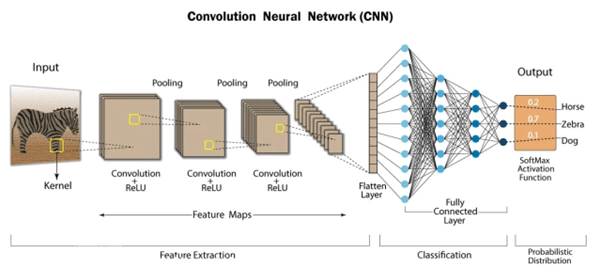
In the e-commerce world, CNNs help retailers organize millions of product images efficiently.
They automatically recognize patterns like color, texture, and shape to generate descriptive tags — “red dress,” “leather wallet,” or “running shoes.”
Use cases include:
Quality Control: Sellers use CNNs to detect low-quality or duplicate product photos before publishing.
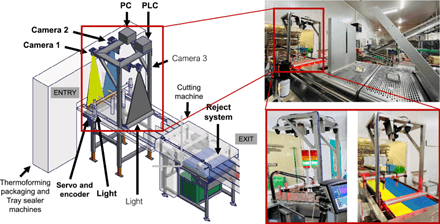
Ultimately, CNNs make online shopping more intuitive and visually driven — much like walking through a physical store.
Autonomous vehicles rely heavily on CNNs for object detection, scene understanding, and decision-making.
Through multiple camera feeds, CNNs continuously identify pedestrians, road signs, other vehicles, and lane markings in real time.
Key contributions include:

Without CNNs, self-driving cars would have “eyes” (cameras) but no “brains” to interpret what they see. CNNs are what make them perceive and react like human drivers.
CNNs have revolutionized security and authentication systems by improving accuracy and speed in identifying individuals.
They are at the core of:
Facial Recognition: Unlocking smartphones, verifying identity at airports, or monitoring surveillance footage.
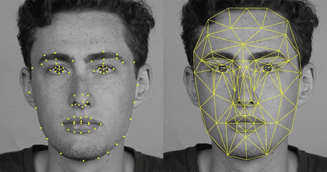
By learning distinctive facial features — like eye spacing, jawline, or texture patterns — CNNs can verify identities in milliseconds, making both convenience and safety possible in the digital age.
Social media platforms are among the largest users of CNNs. They leverage image recognition models to filter, enhance, and personalize visual content at scale.
Real-world examples:
This seamless integration of CNNs creates a personalized and safe experience while enabling massive scalability for billions of users. Each use case leverages the CNN’s ability to “see” and extract meaning from visual data, enabling smarter systems that replicate human-like perception.
Top Tutorials

Python
Python is a popular and versatile programming language used for a wide variety of tasks, including web development, data analysis, artificial intelligence, and more.

SQL
The SQL for Beginners Tutorial is a concise and easy-to-follow guide designed for individuals new to Structured Query Language (SQL). It covers the fundamentals of SQL, a powerful programming language used for managing relational databases. The tutorial introduces key concepts such as creating, retrieving, updating, and deleting data in a database using SQL queries.

Data Science
Learn Data Science for free with our data science tutorial. Explore essential skills, tools, and techniques to master Data Science and kickstart your career

 in Bengaluru, India



All Courses (6)
Master's Degree (2)
Fellowship (2)
Certifications (2)

 Layer-by-Layer Breakdown


 in Bengaluru, India