






Admit it, you're addicted (which isn't a terrible thing).
Let's be honest: if technology were a person in your life, it would be the crazy flatmate who never pays rent but somehow keeps the lease and is always present, constantly meddling and completely indispensible. Do you think you "use technology sometimes"? Funny. It's more realistic to say you are technology, or at least a component of this wild, humming digital ecosystem that wakes you up, informs you when to eat, reminds you to breathe, and discreetly analyses your screen time every weekend.
If you still believe that technology is only a "gadget," let them go immediately. With two-thirds of the world's population connected, technology has become an essential part of life, albeit with occasionally poor Wi-Fi.
In this blog, I'll explain the role of technology in our daily lives, why it's more important than ever, and how it affects every aspect of modern life, from education to healthcare to business, commuting to binge-watching. In addition, we'll discuss how to endure this technological conquest while maintaining your sanity (and humanity).
The Importance of Technology in Our Daily Life
When people talk about "technology," they frequently refer to smartphones or computers. However, the significance of technology goes much deeper. It's the platform, the stage, and the backstage all in one. Technology has become an integral part of how we live, work, communicate, learn, heal, and play. It is the foundation of modern life.
From powering your morning alarm to facilitating worldwide communication, technology is the unseen thread that ties almost every aspect of our lives. And, with 5.56 billion people globally now using the internet, its importance is only increasing.
Technology in Communication: Why Can't You Stop Texting?
Remember when writing a letter required physical paper and a postal service? Yeah, me neither. Nowadays, communication technology is constant, fast, and, to be honest, a little overwhelming, but in the nicest way.
- Instant messaging and social networks: With platforms like WhatsApp and Threads, we can ping anyone, anywhere, at any time.
- AI-powered chats: ChatGPT and other generative AI tools understand and generate human-like responses.
- Global reach: Whether it's a friend in another city or a business across the globe, we can communicate in real time.
Here's the kicker: ChatGPT, WhatsApp, and Threads are all in the top 100 apps in 37 countries. ChatGPT's average placement was 8.57, beating WhatsApp's average of 10.24. That statistic alone should demonstrate how AI has moved beyond its niche status and into the mainstream. Communication clearly evolved into co-thinking with machines.
What's the outcome? Technology has made communication rapid, scalable, and (at times) frighteningly smart. And, yeah, your group chat memes make valuable contributions to human discourse.
Technology in Education: Learning without Walls.
If you believe that education is trapped in the last century (chalkboards, dusty textbooks, and the smell of old pages), think again. Technology in education has blossomed in so many positive ways.
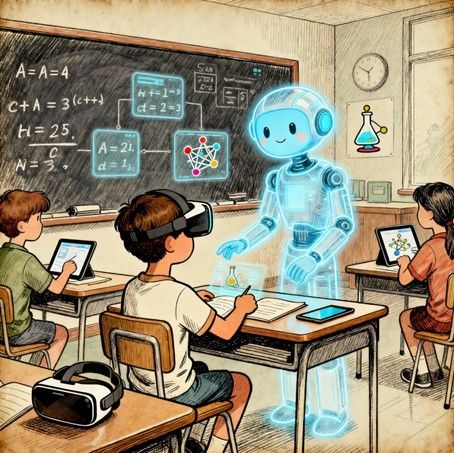
- Smartboards, digital whiteboards, simulations, and visual tools help students understand complex concepts.
- AI tutors: Personalised learning platforms monitor your progress, identify your weaknesses, and adapt to your speed.
- Online courses and virtual classrooms: Whether you live in a distant country or a city flat, distance is no longer an impediment.
Ed-tech is helping kids understand "complex subjects" using entertaining technologies. Visualisations, gamified quizzes, and collaborative assignments make learning much more enjoyable than mechanical memorisation.
Then there's the issue of access: you don't have to attend a prestigious school to receive a good education. Knowledge has become more accessible due to technological advancements. Whether you're learning code, languages, or leadership, you can do it on your own time. This is a revolution.
Technology in Healthcare: Making Medicine More Effective
Technology isn't just for "fun stuff." It also saves lives. The role of technology in healthcare is becoming increasingly important, and more personal than ever.
- Telemedicine eliminates the need for commuting and waiting rooms. You can consult a doctor from your bedroom using your phone or computer.
- Wearables and health tracking: Whether you wear an Apple Watch, a Fitbit, or another smart band, they all track your heart rate, sleep, steps, and other metrics.
- Electronic Health Records (EHR): Doctors use digital records to eliminate errors, follow patient history, and speed up diagnosis.
- AI diagnostics: Algorithms detect patterns in medical data that humans might miss.
According to ITI Technical College, information technology lowers medical errors (such as coding or spelling errors) and enhances preventative care. That's not science fiction; it's real. Meanwhile, methods for remote consultations are reducing the gap between patients and specialists, particularly in underprivileged areas.
When technology and healthcare collaborate, the end result is improved access, smarter treatment, and (hopefully) fewer "Is this just a weird rash?"
Technology in Business: Why Modern Businesses Cannot Live Without It
Here's where things get serious: technology is everything to businesses. Forget "optional add-on", technology is now the primary driver of development, innovation, and global competitiveness.
- Digital-first strategies: A staggering 89% of organisations have implemented digital-first strategies.
- Leadership buy-in: 37% of CEOs consider digital transformation a major priority.
- Automation and analytics: AI now handles tasks that would have previously taken hours. Real-time data informs decisions.
- Collaboration tools: Remote work is here to stay, thus cloud platforms, digital workplaces, and project management tools are essential.
- Cybersecurity: As businesses transition to digital, data protection becomes increasingly important.
According to NASSCOM, it is even predicted that India’s IT industry might reach $300 billion by FY26. That is a tech-fueled economic behemoth.
For modern enterprises, technology is a source of competitive advantage, resilience, and creativity.
Technology in Transportation: From Horse and Buggy to Hyperloop (Almost)
Previously, transportation meant waiting, guessing, and occasionally getting lost. Commuting today feels like something out of a science fiction film, sans the flying cars.
Here's how transit technology is affecting everything.
- Ride-hailing apps: You launch an app, a car arrives, and suddenly you are a transportation logistics expert.
- Navigation and traffic: GPS, real-time traffic statistics, and intelligent routing make travel faster and less irritating.
- Electric vehicles: Cleaner, quieter, and more technologically advanced, EVs are no longer a "future thing."
- Smart infrastructure includes IoT-enabled traffic signals, vehicle-to-infrastructure connection, and data-driven urban planning.
When we combine these, we get smarter, greener transportation. Reduced traffic congestion, lower pollutants, and a more pleasant commute.
Entertainment and Lifestyle: Because We Are Not Robots (Yet)
Yes, technology is a significant business. But don't forget that it's also incredibly entertaining. The importance of technology in our life would not be complete without discussing how we pleasure ourselves.
- Streaming services: Netflix, YouTube, and Spotify—your complete entertainment library is now in your pocket.
- Gaming: Whether it's a console, mobile, online multiplayer, or cloud-based game, technology has made it extremely sociable.
- Smart homes: Lights, speakers, locks, and thermostats all respond to your voice (or dramatic commands).
- Creative tools: With AI tools for writing, drawing, composing music, and creating movies, becoming an artist no longer requires a degree.
In short, technology has transformed downtime into an engaging, creative, and highly personalised experience.
Cybersecurity and Privacy: The Cost of Our Digital Freedom
As much as we adore technology, we can't overlook the bad side: security, privacy, and the constant threat of being hacked or monitored.
Key Issues:
- Cyberattacks: As more people use the internet, crooks follow suit.
- Data breaches: Personal information, financial accounts, and health data are all exposed.
- Surveillance: Technology can track practically anything, and not necessarily in benign ways.
- Digital literacy: Knowing how to utilise technology isn't enough; you also need to know how to thrive in it.
Contemporary IT systems play an important role in detecting risks and protecting data. However, individual responsibility is also important: use strong passwords, enable 2FA, and do not treat "I agree" boxes as suggestions.
Environmental Impact: When Technology Fights for the Planet (or Doesn't)
The paradox is that technology has the potential to heal as well as harm our earth. The value of technology in encouraging sustainability is undeniable, but so is the expense.
How Technology Helps:
- Advanced technology is heavily used in green energy sources such as solar, wind, and smart grids.
- Efficient resource use: IoT sensors optimise water, power, and waste.
- Electric mobility: EVs and data-driven public transport lower pollution.
- Smart agriculture: Technology-driven farming improves yield while reducing environmental impact.
But…:
- E-waste: Old phones, laptops, and batteries don't disappear; they accumulate.
- Data centres and blockchain processes are extremely energy intensive.
- Mining issues: The extraction of rare earth elements for electronics poses major environmental and human rights concerns.
So, certainly, technology may be a tremendous ally in the fight for sustainability, but only if we use it wisely. Otherwise, it's just a faster method to generate difficulties.
Challenges and Ethics: The Hidden Side of Innovation
If innovation is the gleaming new car, ethics and challenges are the pebbles in the road. Here are the major ones we cannot afford to ignore:
- Screen addiction: We adore our devices, sometimes too much.
- Job displacement: Automation and artificial intelligence (AI) are altering labour markets; some jobs disappear, while others evolve.
- Misinformation: With so much content available online, separating fact from fiction is more difficult (and crucial) than ever.
- AI ethics: From deepfakes to decision-making, AI poses issues of accountability, prejudice, and control.
The digital gap means that access is not equal. Not everyone has the same opportunities to gain from technology.
Yes, technology is powerful. But with enormous power comes great responsibility, and we must decide how to use it wisely.
Generative AI and the Future: Buckle Up for a Wild Ride
If you think ChatGPT is cool today, wait until tomorrow. The future of technology, particularly generative AI, is now here, and it is developing quickly.
Here's what's coming.
- Generative AI: Searches for this skyrocketed, average global monthly searches reached 668,000+ in 2024, representing a staggering 2,806% increase between 2022 and 2024.
- Edge computing + cloud: Faster processing close to the data source combined with strong cloud infrastructure yields near-instant data insights.
- Robotics and automation: Robots will be used for more than just production; they could also aid us in homes, hospitals, and offices.
- Quantum computing is still a niche technology, but it has the potential to revolutionise cryptography, optimisation, and artificial intelligence.
- 5G and beyond: Ultrafast, low-latency networks that power IoT, smart cities, and real-time systems.
In five or ten years, technology may co-author our lives, make decisions, and shape reality in ways we cannot yet comprehend. (Yes, the science-fiction nerd in me is thrilled.)
Why the Role of Technology Matters Now More Than Ever
So, why does this matter?
- Connectivity is universal: With billions of people online, technology is the backbone of contemporary life.
- Efficiency and productivity: From corporate to personal duties, technology enables us to accomplish more in less time.
- Access to opportunity: Education, healthcare, and creative tools are no longer restricted by geography.
- Sustainability potential: With intelligent design, technology can help us combat climate change.
The next wave of AI, computing, and automation will transform how we live. Simply put, technology is important not only for convenience, but also for possibility.
How to Live in a Technologically Advanced World (Without Letting It Eat You Alive)
Yes, technology is powerful, but you do not have to be powerless. Here's how to ride the wave and not get crushed by it:
- Increase your digital literacy.
- Learn when not to use tools, as well as how to utilise them.
- Understand data privacy, internet ethics, and digital rights.
- Take courses, watch explainers, and read up—staying informed is your superpower.
- Establish healthy boundaries.
- Set app timers, "do not disturb" modes, and digital detox days.
- Adopt thoughtful use: recognise when technology is beneficial versus distracting.
- Treat your devices as coworkers: valuable, but not everything.
- Promote responsible innovation.
- Support ethical AI, transparent technology, and sustainable design.
- Advocate for digital inclusion—push for improved access, particularly in areas with limited infrastructure.
- Think green: recycle electronics, choose energy-efficient items, and reduce e-waste.
- Use technology as a tool and not a crutch.
- Allow it to boost your creativity rather than replace it.
- Use automation to free up brain space for the important things: relationships, intense work, and rest.
Remember: owning a smarter phone does not make you smarter; but, using it correctly can.
Final Word: Technology is here to stay, let's make it work for us.
Bottom line: technology is not a transitory fad. It is inextricably linked to modern life, powering communication, education, business, healthcare, and entertainment, among other things. It plays a huge role in our daily lives, and its influence is only increasing.
But here's the thing: despite its power, technology is only as good as how we utilise it. It has the potential to either improve or devastate our lives. It has the potential to either solve or exacerbate climate issues. It has the potential to both democratise learning and expand the digital divide.
That is why recognising the value of technology is more important than ever. Because we are more than simply users; we are co-creators of the digital future. And if we take the initiative with wisdom, accountability, and a bit of weirdness, we can ensure that this future is one we want to live in.
So go ahead and embrace technology, be curious, demand better, and maybe even put your phone down for five minutes (just to prove you can). Although technology plays a significant role in our daily lives, how do you influence how it is used? That is even bigger.







 in Bengaluru, India


 in Bengaluru, India