





As AI becomes ubiquitous and infrastructure shifts to cloud-native, organizations will prioritize secure, sustainable, and automated systems. Engineers with depth in Generative AI, Full Stack, Cloud/DevSecOps, Cybersecurity, Web3, Data Science/MLOps, AR/VR, Quantum, RPA, and Green/Edge AI will be positioned for leadership roles in product and platform teams.
Top Technologies to Learn in 2026 – Summary Overview
| Technology | Key Roles | Complexity | Salary Range (INR / USD) |
|---|---|---|---|
| Generative AI | AI Engineer, LLM Developer | High | ₹25–50 LPA / $120K+ |
| Full Stack Development | Software Engineer, Web Developer | Medium | ₹12–30 LPA / $90K+ |
| Cloud & DevSecOps | Cloud Architect, Platform Engineer | Medium | ₹15–35 LPA / $100K+ |
| Cybersecurity | SOC Analyst, Ethical Hacker | Medium | ₹10–28 LPA / $95K+ |
| Blockchain & Web3 | Blockchain Engineer, dApp Developer | High | ₹18–40 LPA / $110K+ |
| Data Science & MLOps | ML Engineer, Data Scientist | High | ₹14–38 LPA / $105K+ |
| AR/VR & Spatial Computing | XR Developer, Simulation Specialist | High | ₹12–32 LPA / $100K+ |
| Quantum Computing | Quantum Researcher, Cryptography Scientist | Very High | ₹22–50 LPA / $130K+ |
| RPA & Intelligent Automation | Automation Engineer, AI Consultant | Medium | ₹10–25 LPA / $90K+ |
| Green Tech & Edge AI | IoT Architect, Sustainability Analyst | Medium | ₹9–22 LPA / $85K+ |
Generative AI and Foundation Models
Generative AI uses foundation models to create text, images, audio, and code. 2026 will emphasize domain-tuned models, evaluation, and LLMOps.
Use Cases
- AI copilots for coding, documentation, and analytics.
- Marketing content, product descriptions, and creative assets.
- Healthcare research assistance and drug molecule simulation.
- Synthetic data for privacy-preserving training.
Case Study – Microsoft Copilot
Microsoft 365 integrates generative AI to summarize meetings, draft emails, and automate reports—accelerating enterprise workflows at scale.
Comparison: Traditional AI vs Generative AI
| Aspect | Traditional AI | Generative AI |
|---|---|---|
| Function | Prediction and classification | Creation and synthesis |
| Output | Labels or scores | Text, images, code |
| Data Needs | Structured data | Large-scale unstructured data |
| Evaluation | Accuracy, F1-score | Human + automated evaluation, factuality, safety |
Learning Path & Career Scope
- Master Python, ML basics, and deep learning (Transformers).
- Practice prompt engineering, RAG, and fine-tuning open-source LLMs.
- Deploy with LLMOps: monitoring, guardrails, and cost control.
- Roles: AI Engineer, LLM Developer, AI Product Lead.
Full Stack Development
Full Stack engineers ship end‑to‑end products: UI, APIs, databases, testing, and CI/CD. Modern stacks favor TypeScript and server-side rendering.
Use Cases
- SaaS platforms and admin dashboards.
- E‑commerce with secure payments.
- Internal tools for analytics and ops.
Case Study – Netflix
Netflix uses a microservices architecture with Node.js and Java services, enabling low‑latency streaming for millions of users.
Comparison: Frontend vs Backend vs Full Stack
| Aspect | Frontend | Backend | Full Stack |
|---|---|---|---|
| Focus | UI/UX and accessibility | Business logic, APIs, databases | End-to-end development including CI/CD |
| Core Tools | React/Next.js, HTML/CSS | Node/Nest, Django, SQL/NoSQL | MERN/MEAN, Prisma/TypeORM, Docker |
| Testing | Unit tests, UI tests | Integration tests, API tests | End-to-end pipelines (Cypress/Playwright) |
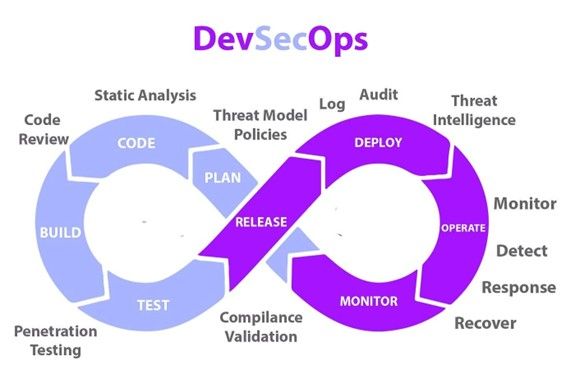
Cloud Computing & DevSecOps
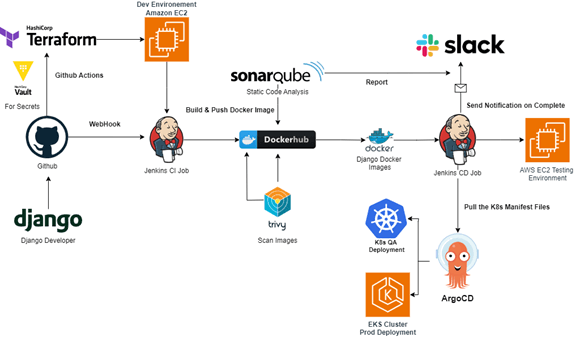
Cloud provides elastic infrastructure; DevSecOps bakes security into delivery pipelines. 2026 trends include GitOps, platform engineering, and cost-aware design.
Use Cases
- Global app hosting and autoscaling.
- Automated CI/CD and progressive delivery.
- Observability, incident response, and FinOps.
Case Study – AWS Lambda Serverless
AWS Lambda enables event‑driven compute with zero server management, reducing operational toil and enabling rapid iteration.
Comparison: DevOps vs DevSecOps
| Feature | DevOps | DevSecOps |
|---|---|---|
| Primary Goal | Velocity and reliability | Secure velocity with guardrails |
| Security | Often post-deployment | Shift-left scans and policy as code |
| Common Tools | Jenkins, Docker, ArgoCD | SAST/DAST, Vault, OPA, Prisma |
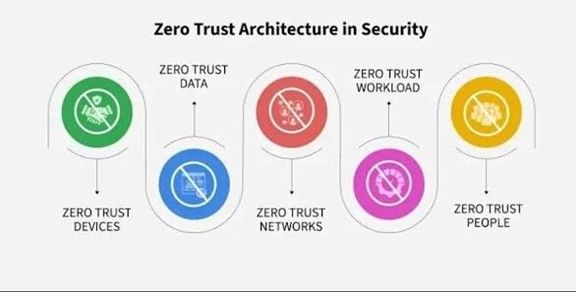
Cybersecurity & Zero Trust Architecture
Zero Trust assumes breach and verifies every request using identity, device posture, and context. Security spans prevention, detection, and response.
Use Cases
- Identity and access management (IAM).
- Threat detection and SIEM.
- Endpoint, container, and IoT security.
Case Study – Google BeyondCorp
Google’s BeyondCorp implements Zero Trust at scale with context‑aware access—securing a global workforce without traditional VPNs.
Comparison: Traditional Security vs Zero Trust
| Aspect | Traditional | Zero Trust |
|---|---|---|
| Verification | Perimeter / firewall-based | Continuous, identity-centric |
| Access Model | Network or role-based | Device posture + user context |
| Remote Work | Cumbersome VPNs | Natively supported |
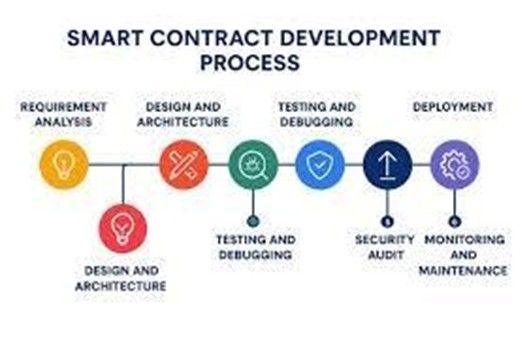
Blockchain & Web3
Blockchain enables transparent, tamper‑resistant ledgers. Web3 focuses on user ownership, programmable money, and decentralized apps.
Use Cases
- DeFi payments and lending.
- Supply‑chain traceability.
- Decentralized identity (DID) and verifiable credentials.
Case Study – IBM Food Trust
IBM Food Trust uses blockchain to track produce from farm to shelf, improving transparency and recall response times.
Comparison: Web2 vs Web3
| Aspect | Web2 | Web3 |
|---|---|---|
| Data Control | Platform-owned | User-owned via wallets/keys |
| Identity | Email/password | DIDs and wallets |
| Monetization | Ads/subscriptions | Tokens and protocols |
Data Science & MLOps
What is Data Science?
Data Science focuses on extracting insights from structured and unstructured data using statistical analysis, machine learning, and predictive modeling.
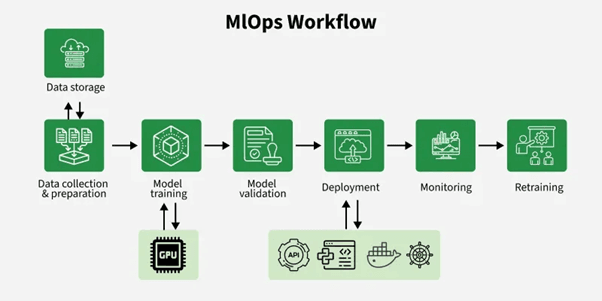
What is MLOps?
MLOps operationalizes machine learning by turning models into scalable, reliable, and continuously monitored production services.
2026 Focus Areas
In 2026, the emphasis is on:
Data quality and governance
Model observability and monitoring
Real-time inference at scale
Reliable deployment pipelines
Key Use Cases
Demand Forecasting & Inventory Optimization
Improving supply chain efficiency through predictive analytics.
Fraud Detection & Risk Scoring
Used in finance and fintech to identify anomalies and reduce risk exposure.
Recommendation Engines
Powering personalization in media platforms and e-commerce.
Predictive Maintenance
Reducing downtime in manufacturing and energy through failure prediction.
Case Study: Uber Michelangelo Platform
Overview
Uber’s Michelangelo platform standardized the entire machine learning lifecycle.
Capabilities
Data preparation
Model training
Deployment automation
Continuous monitoring
Impact
Enabled hundreds of production ML models across:
Dynamic pricing
ETA prediction
Fraud detection
Safety systems
Comparison: Data Science vs MLOps
| Aspect | Data Science | MLOps |
|---|---|---|
| Primary Focus | Exploration, feature engineering, modeling | Deployment, monitoring, governance |
| Common Tools | Pandas, NumPy, scikit-learn | MLflow, Kubeflow, Airflow, Feast |
| Deliverable | Insights, notebooks, models | Reliable services with SLAs/SLOs |
Comparison: Batch vs Real‑Time Inference
| Criteria | Batch Inference | Real-Time Inference |
|---|---|---|
| Latency | Minutes to hours | Milliseconds to seconds |
| Cost | Efficient for large jobs | Higher per request |
| Use Cases | Monthly churn scoring | Fraud blocking at checkout |
Learning Path & Career Scope
- Statistics, Python, and SQL fundamentals.
- Modeling: tree methods, linear models, neural networks.
- Production: feature stores, CI/CD for ML, monitoring and drift detection.
- Roles: Data Scientist, ML Engineer, MLOps Engineer, Data Engineer.
AR/VR & Spatial Computing
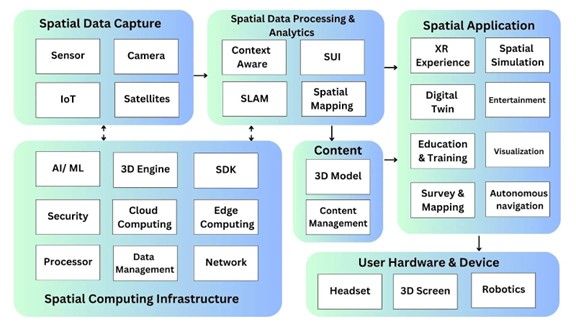
Spatial computing blends real and virtual spaces, enabling immersive training, design, and collaboration. The ecosystem includes AR (overlays), VR (fully virtual), and MR (anchored 3D in real environments).
Use Cases
- VR training for healthcare, aviation, and manufacturing safety.
- AR try‑on and product visualization in retail and e‑commerce.
- Remote collaboration and digital twins for industrial maintenance.
Case Study – IKEA Place (AR)
IKEA’s AR app lets customers visualize furniture at home at true scale, reducing returns and improving purchase confidence.
Comparison: AR vs VR vs MR
| Aspect | AR (Augmented) | VR (Virtual) | MR (Mixed) |
|---|---|---|---|
| Environment | Overlay on real world | Fully virtual world | 3D content anchored to reality |
| Hardware | Phones / smart glasses | Head-mounted displays | Advanced mixed-reality headsets |
| Best For | Retail, field service | Training, simulation | Design, collaboration |
Comparison: Unity vs Unreal Engine
| Aspect | AR (Augmented) | VR (Virtual) | MR (Mixed) |
|---|---|---|---|
| Environment | Overlay on real world | Fully virtual world | 3D content anchored to reality |
| Hardware | Phones / smart glasses | Head-mounted displays | Advanced mixed-reality headsets |
| Best For | Retail, field service | Training, simulation | Design, collaboration |
Learning Path & Career Scope
- Learn 3D fundamentals and linear algebra basics.
- Practice with Unity/Unreal, ARKit/ARCore APIs.
- Design for usability: motion sickness, interaction, accessibility.
- Roles: XR Developer, 3D Technical Artist, Simulation Engineer.
Quantum Computing
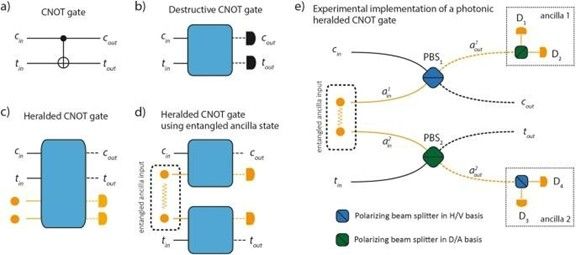
Quantum computers use qubits that exist in superposition and entanglement, unlocking speedups for certain optimization and simulation problems. In 2026, hybrid classical‑quantum workflows and post‑quantum cryptography R&D are core focus areas.
Use Cases
- Molecular simulation for drug discovery and materials science.
- Optimization in logistics, routing, and portfolio selection.
- Research on quantum‑safe cryptography and key exchange.
Case Study – IBM Quantum Network
IBM’s Quantum Network provides researchers and enterprises access to quantum hardware and Qiskit, accelerating education and prototyping.
Comparison: Classical vs Quantum Computing
| Property | Classical | Quantum |
|---|---|---|
| Unit | Bit (0 or 1) | Qubit (superposition of 0 and 1) |
| Parallelism | Instruction-level parallelism | Amplitude-level parallelism for certain algorithms |
| Algorithms | Optimized sorting and search algorithms | Grover’s and Shor’s algorithms for specific tasks |
Comparison: Gate‑Model vs Annealing vs Simulation
| Approach | Gate-Model QCs | Quantum Annealers | Classical Simulators |
|---|---|---|---|
| Strength | General-purpose quantum algorithms | Optimization problems | Education and small-scale testing |
| Availability | Limited cloud access | Commercial devices available | Broadly available |
| Use | R&D and academic research | Industrial heuristics and optimization | Development and testing without quantum hardware |
Learning Path & Career Scope
- Learn linear algebra and complex probability.
- Use Qiskit/Cirq; implement simple circuits and algorithms.
- Study post‑quantum cryptography trends and standards.
- Roles: Quantum Researcher, Quantum Software Engineer, Cryptography Scientist.
RPA & Intelligent Automation
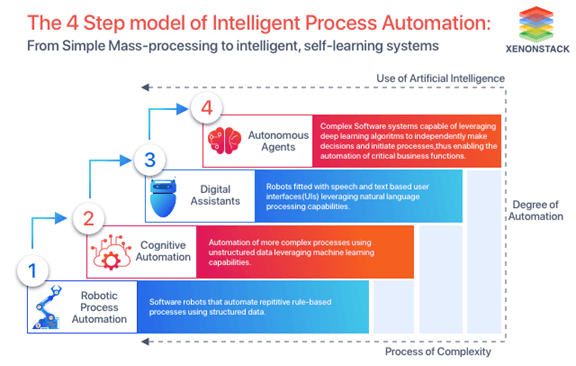
Robotic Process Automation (RPA) automates repetitive tasks through UI scripting and APIs. Intelligent automation fuses RPA with AI for document understanding, decisioning, and conversational workflows.
Use Cases
- Invoice processing and reconciliation in finance.
- HR onboarding, payroll, and compliance reporting.
- Customer support triage and back‑office ticket routing.
Case Study – Banking Back‑Office Automation
Large banks deploy UiPath/Automation Anywhere to cut manual effort in KYC and loan processing, reducing cycle times and errors significantly.
Comparison: RPA vs Intelligent Automation vs BPM
| Aspect | RPA | Intelligent Automation | BPM / Workflow |
|---|---|---|---|
| Focus | Task automation | Tasks + AI-driven decisions | End-to-end process orchestration |
| Inputs | Structured screens and APIs | Documents, email, chat + APIs | Defined processes and SLAs |
| Best For | High-volume repetitive tasks | Unstructured data + task automation | Cross-team business processes |
Comparison: Attended vs Unattended Bots
| Criteria | Attended Bots | Unattended Bots |
|---|---|---|
| Trigger | User-initiated on desktop | Scheduled or event-driven |
| Supervision | Human in the loop | Fully automated |
| Use Cases | Agent assist | Nightly batch operations |
Learning Path & Career Scope
- Learn RPA tools (UiPath, Automation Anywhere, Power Automate).
- Integrate OCR/NLP for document understanding.
- Design governance: audits, exception handling, ROI tracking.
- Roles: RPA Developer, Automation Architect, AI Process Consultant.
Green Tech, Edge AI & Sustainability
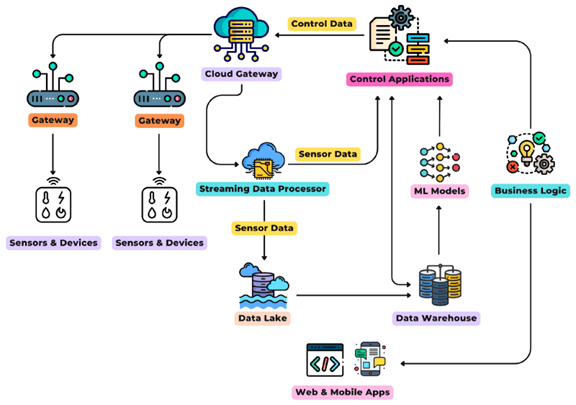
Sustainable computing is now a business mandate. Edge AI reduces data movement and latency, while green cloud practices cut carbon and cost.
Use Cases
- Carbon‑aware workload shifting in data centers.
- Smart grids and renewable forecasting.
- Edge AI for industrial quality control and safety monitoring.
Case Study – Carbon‑Intelligent Computing
Major cloud providers schedule workloads to regions and times with cleaner energy, reducing operational emissions while meeting performance targets.
Comparison: Edge vs Cloud vs Hybrid
| Criteria | Edge | Cloud | Hybrid |
|---|---|---|---|
| Latency | Ultra-low | Network-dependent | Optimized per workload |
| Privacy | Local data processing | Centralized storage | Selective data sharing |
| Best For | Real-time control systems | Analytics at scale | Balanced, distributed architectures |
Learning Path & Career Scope
- Learn IoT protocols (MQTT), microcontrollers, and TinyML.
- Study carbon accounting, green architecture, and FinOps.
- Deploy inference on devices (TensorFlow Lite, ONNX Runtime).
- Roles: Edge AI Engineer, Sustainability Analyst, IoT Architect.
Future Outlook 2030
By 2030, AI‑assisted development will be standard; most enterprises will adopt Zero Trust and platform engineering; and carbon constraints will shape infrastructure design. Hybrid quantum‑classical workflows will enter targeted production domains, while spatial computing becomes a mainstream UI.
Sector Adoption Snapshot (2030 Projection)
| Sector | High-Impact Technologies | Adoption Level |
|---|---|---|
| Finance | AI/ML, RPA, Zero Trust | Very High |
| Healthcare | GenAI, AR/VR training, Edge AI | High |
| Manufacturing | Digital twins, Edge AI, Robotics | High |
| Retail | Full Stack, Cloud, AR try-on | High |
| Public Sector | Data governance, Cybersecurity | Medium-High |
Career Preparation Checklist (2026)
- Choose one core technology and one complementary skill (e.g., AI + Cloud).
- Build 3–5 portfolio projects with readme, tests, and deploy links.
- Earn one vendor or open‑source certification aligned to your path.
- Contribute to open source; engage in forums and meetups.
- Create a learning system: weekly goals, retrospectives, and notes.
- Practice system design and security fundamentals across all roles.
Conclusion
Depth beats breadth. Pick the technologies aligned with your goals, ship projects, and measure outcomes. The most valuable engineers in 2026 will combine technical mastery with secure, sustainable, and user‑centric thinking.





 in Bengaluru, India


 in Bengaluru, India