

Your Success, Our Mission!
6000+ Careers Transformed.
Explanation:
Integrated Development Environments (IDEs) such as IntelliJ IDEA, Eclipse, and NetBeans provide automated code completion, debugging tools, refactoring, dependency management, and version control integration. These tools accelerate development and reduce human error, especially in large-scale applications.
IntelliJ IDEA is preferred for modern Java projects due to its powerful static analysis and intelligent code suggestions. Eclipse remains popular in academic and enterprise circles due to its extensibility.
Code:
// IDE auto-generates getters and setters
public String getName() { return name; }
| IDE | Strength | Use Case |
|---|---|---|
| IntelliJ | Smart completion, plugins | Enterprise apps |
| Eclipse | Lightweight, extensible | Academic and legacy systems |
| NetBeans | GUI tools | Desktop apps |
Technical Example:
A team building a banking system uses IntelliJ’s Spring Boot integration to auto-generate controllers, entities, and repositories.
Use Cases:
• Large-scale enterprise projects
• Automated testing environments
• Continuous integration setups
Explanation:
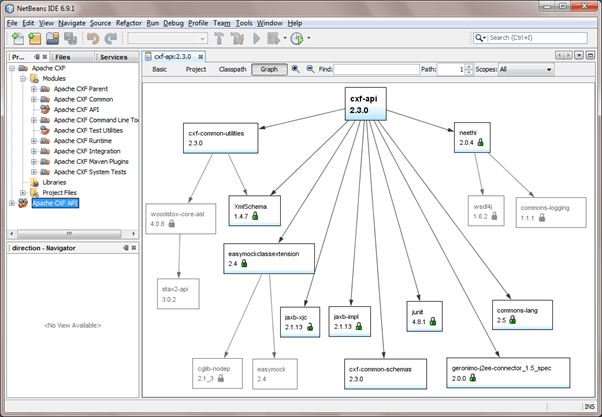
Build tools automate compiling, testing, packaging, and dependency management. Maven uses XML-based configuration (pom.xml), while Gradle uses Groovy/Kotlin DSLs for more flexibility. Both tools streamline project setup and automate complex workflows in enterprise development.
Code:
// Example Maven dependencyorg.springframework spring-core 5.3.0
| Tool | Format | Strength |
|---|---|---|
| Maven | XML | Predictable lifecycle |
| Gradle | DSL | Faster builds, flexible |
Technical Example:
A microservices architecture uses Gradle to manage hundreds of modules, ensuring consistent dependency versions and reproducible builds.
Use Cases:
• Enterprise pipelines
• Multi-module project management
• Automated deployments
Java remains one of the most influential and enduring programming languages in modern computing due to its platform independence, object-oriented paradigm, security guarantees, and vast ecosystem. From its origins as a language for embedded systems to its evolution as a core technology for enterprise servers, mobile devices, cloud-native applications, and scientific research, Java has demonstrated exceptional adaptability and resilience.
The language’s robust memory management, modular architecture, and extensive standard libraries contribute to dependable performance across diverse environments. Its virtual machine–based execution model ensures that Java programs operate consistently on any platform, making it a preferred choice for organizations requiring scalability and long-term maintainability. Furthermore, the introduction of modern features such as lambda expressions, functional programming constructs, improved garbage collectors, and lightweight frameworks reinforces Java’s relevance in the contemporary software landscape.
Real-world applications demonstrate that Java is deeply embedded in global banking systems, enterprise infrastructures, Android ecosystems, cloud-based microservices, big data platforms, and high-performance scientific simulations. The language’s extensive tooling—IDEs, build tools, testing frameworks, and CI/CD platforms—further streamlines development, making it suitable for both beginners and advanced practitioners.
Overall, Java’s combined strengths of reliability, versatility, security, and ecosystem maturity ensure that it will continue to play a crucial role in software engineering, data science, distributed computing, and modern enterprise solutions for many years ahead.
Image Placeholder: “Stack of recommended Java textbooks and documentation pages.”
Java Features
Top Tutorials

CNN in Deep Learning 2026
A beginner-friendly guide to CNNs: understand deep learning essentials, create Python-based models, and explore advanced applications.

Breaking The Limits: Scaling Databases with MySQL Partitioning
Learn MySQL partitioning with examples. Improve query performance, scalability, and data management using RANGE, LIST, HASH, KEY, and composite techniques.

ML in Action: Hands-On Guide to Deploying and Serving Models
Learn model deployment and serving—from concepts to real-world architectures, tools, APIs, containers, and cloud workflows for production-ready ML.

 in Bengaluru, India


All Courses (6)
Master's Degree (2)
Fellowship (2)
Certifications (2)


 JVM, JDK, JRE




 in Bengaluru, India