

Your Success, Our Mission!
6000+ Careers Transformed.
Explanation:
Before Java, software was tightly coupled to hardware. Developers wrote separate versions of applications for each operating system. This created complexity, maintenance overhead, and significant cost. Java solved this by introducing bytecode and the JVM, allowing programs to run identically across platforms.
Java’s portability eliminated platform-specific builds, enabling universal deployment. This model accelerated the development of web-based and enterprise applications.
Example:
A Java program compiled on Windows can run unchanged on Linux, macOS, or any JVM-based platform.
Table:
| Platform | Native Executable? | Java Bytecode? |
|---|---|---|
| Windows | No | Yes |
| Linux | No | Yes |
| macOS | No | Yes |
| Solaris | No | Yes |
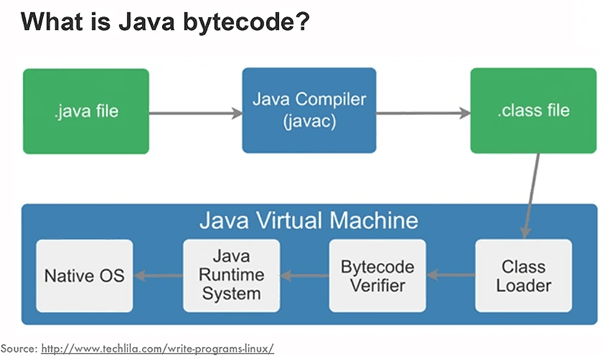
Technical Example:
javac Program.java   // Compiles to Program.class (bytecode)
java Program         // JVM executes same bytecode anywhere
Use Cases:
• Multi-platform enterprise applications
• Cloud-based distributed services
• Educational environments using cross-OS development
Explanation:
C and C++ dominated system programming but suffered from vulnerabilities such as buffer overflows, pointer errors, manual memory management, and platform-specific compilation. Java introduced automatic garbage collection, no pointer manipulation, and strict type-safety rules, making it safer for new developers and large organizations.
Portable, safe code became essential for internet-connected applications, embedded systems, and high-security environments.
Example:
Java blocks developers from accessing invalid memory addresses, preventing segmentation faults.
Table:
| Feature | C/C++ | Java |
|---|---|---|
| Pointers | Yes | No |
| Manual Memory | Yes | No (GC) |
| Security Sandbox | No | Yes |
| Portability | Low | Very High |
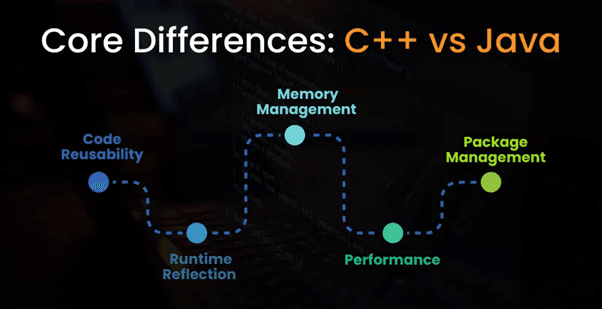
Technical Example:
// No pointers in Java—developer cannot cause memory corruption
String s = "Hello";
Use Cases:
• Web browsers running untrusted code
• Embedded systems with low tolerance for memory errors
• Large-scale enterprise systems needing stability
Top Tutorials

CNN in Deep Learning 2026
A beginner-friendly guide to CNNs: understand deep learning essentials, create Python-based models, and explore advanced applications.

Breaking The Limits: Scaling Databases with MySQL Partitioning
Learn MySQL partitioning with examples. Improve query performance, scalability, and data management using RANGE, LIST, HASH, KEY, and composite techniques.

ML in Action: Hands-On Guide to Deploying and Serving Models
Learn model deployment and serving—from concepts to real-world architectures, tools, APIs, containers, and cloud workflows for production-ready ML.

 in Bengaluru, India


All Courses (6)
Master's Degree (2)
Fellowship (2)
Certifications (2)


 History and Origins




 in Bengaluru, India