

Your Success, Our Mission!
6000+ Careers Transformed.
Imagine you’ve spent weeks building a machine learning model that predicts whether a patient has a particular disease based on medical test results. Your model is accurate, robust, and tested thoroughly. It performs beautifully on your laptop, giving you predictions in seconds.
Now imagine a doctor in a hospital wants to use it to make real-time predictions for their patients. Can the doctor just open your Jupyter notebook, type commands, and run the model for every new patient? Of course not! Doing so would be inefficient, error-prone, and impossible to scale.
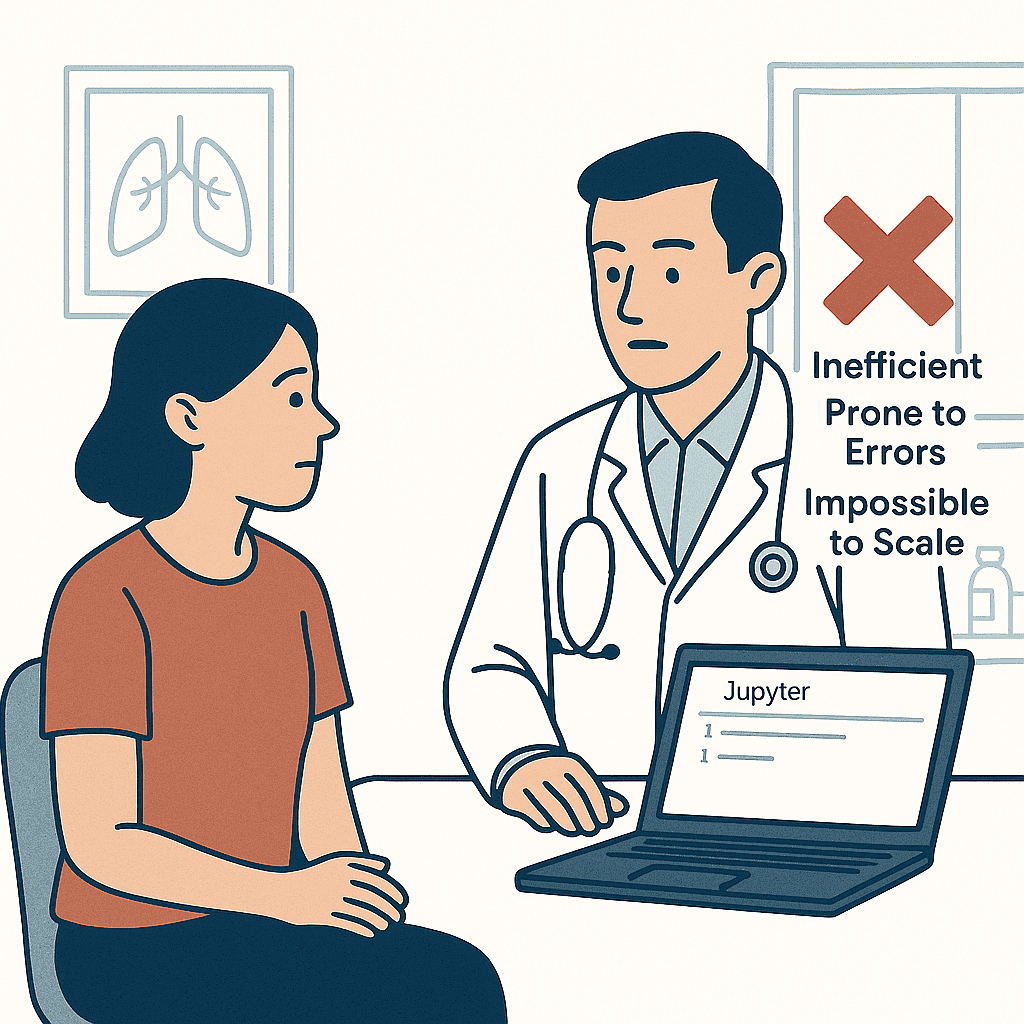
This is where model deployment comes in. Model deployment is the process of taking your trained model and making it accessible to users, applications, or systems in a reliable and scalable way. Deployment transforms a model from a static experiment into a practical tool that can deliver predictions in real-world scenarios.
Think of it like this:
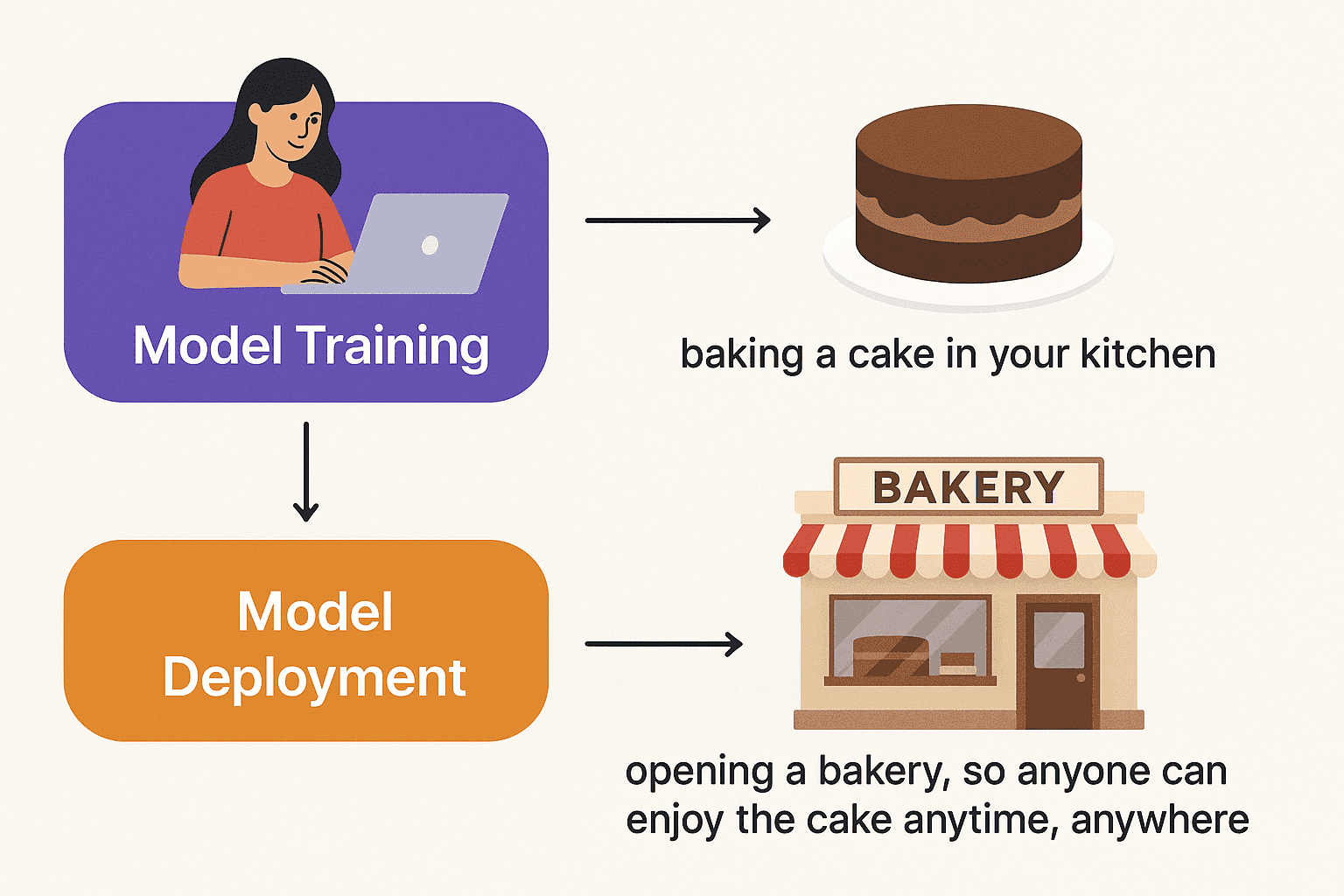
Model training is baking a cake in your kitchen. You know the recipe works and tastes amazing.
Model deployment is opening a bakery, so anyone can enjoy the cake anytime, anywhere.
Without deployment, your model remains stuck on your local machine, no matter how brilliant it is. It cannot create business impact, help users make decisions, or contribute to real-world processes.
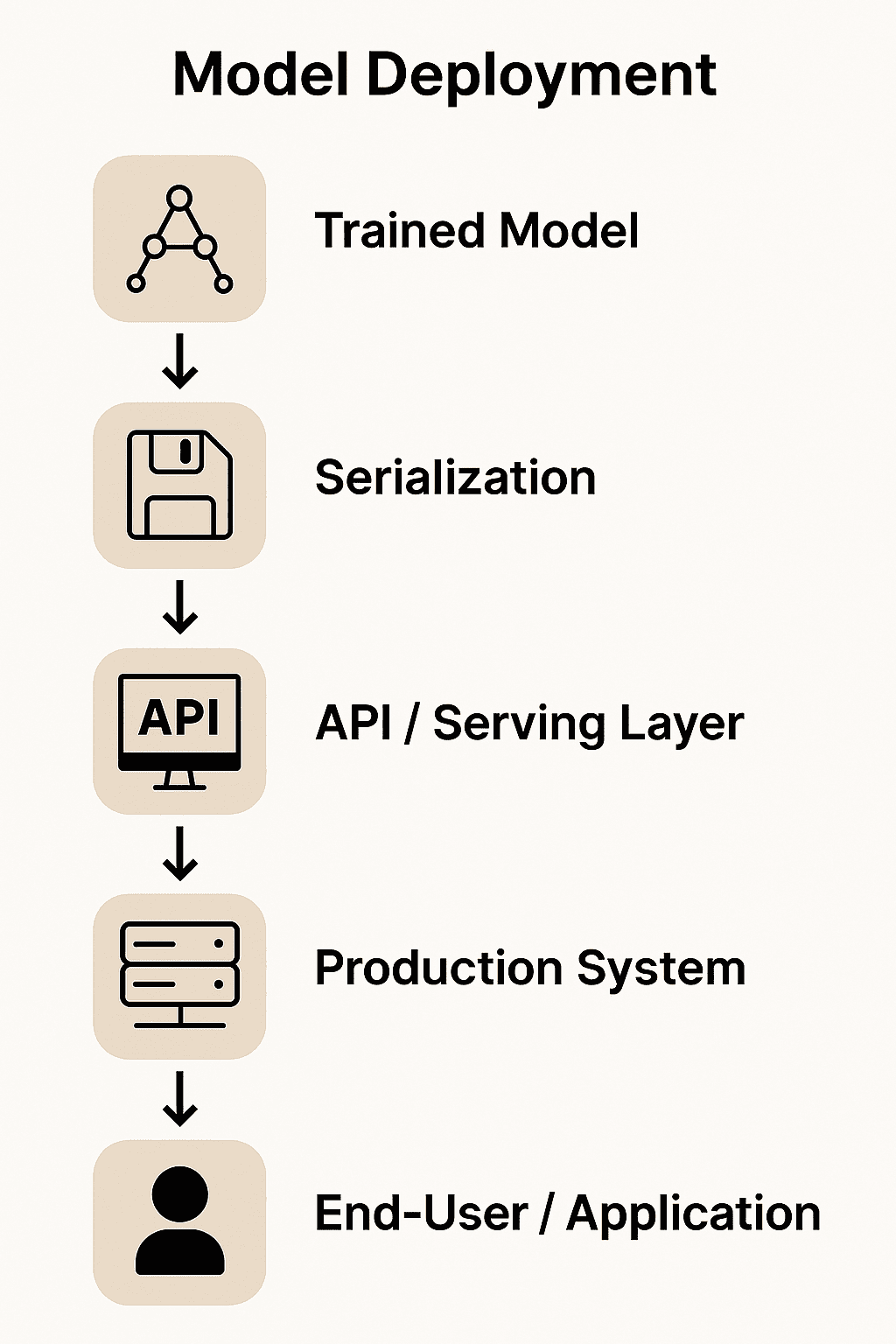
When a model is deployed, it usually goes through a series of steps:
Trained Model: The final version of your model, ready for inference.
Serialization: Saving the model in a format that can be easily loaded later, like Pickle, Joblib, or ONNX.
API / Serving Layer: Wrapping the model in an interface, often a REST API, so other applications or users can send input data and receive predictions.
Production System: Hosting the API on a server or cloud platform, ensuring it’s always available.
End-User / Application: The person, system, or application that requests predictions from the model.
Key Advantages of Deployment:
Accessibility: The model can be used by multiple users or systems without manual intervention.
Reliability: Predictions are consistent, fast, and accurate under different loads.
Scalability: The system can handle multiple simultaneous requests without crashing.
Monitoring: You can track model performance, detect errors, and identify data drift or concept drift.
Real-World Examples:
E-commerce: Recommendation engines suggest products based on user behavior.
Healthcare: Predictive models assist doctors with real-time diagnosis.
Finance: Fraud detection systems monitor transactions continuously, flagging suspicious activity.
Manufacturing: Predictive maintenance models alert technicians before machines fail.
Best Practices to Remember:
Always test the model thoroughly before deployment.
Use versioning to track updates or improvements.
Secure APIs to protect sensitive data.
Monitor performance and retrain models when predictions degrade over time.
In summary, model deployment is the bridge between machine learning development and real-world impact. It ensures that your model isn’t just a tool you play with on your laptop, but a practical solution that delivers value to users, systems, and businesses consistently. Deploying a model properly transforms it from a static asset into a living, working component of real-world applications.
Top Tutorials

GATE 2026 Data Science and AI
Explore this free tutorial to understand various concepts of GATE Data Science and AI 2026 . Learn probability, algebra, calculus, etc.

ChatGPT
In this ChatGPT tutorial, learn how to use ChatGPT effectively. Master the art of conversational AI with our step-by-step lessons. Start to learn ChatGPT today!

Artificial Intelligence
Dive into our comprehensive Artificial Intelligence tutorial and master the fundamentals of AI. From an introduction to advanced concepts, learn AI from scratch

 in Bengaluru, India



All Courses (6)
Master's Degree (2)
Fellowship (2)
Certifications (2)

 What is Model Deployment?


 in Bengaluru, India